Close

Riflescopes with Capped turrets

VIDEO

Introduction

There are plenty of possibilities when buying a rifle scope. Firstly, we have to ask ourselves why are we buying it. What is the main purpose of rifle scope we are looking for? When we define almost everything about our needs and try to determine the perfect scope, we still have to answer ourselves what kind of turrets should be the best option for us.

In this article, we are going to briefly discuss the most common turrets of them all – capped turrets.

Capped Turrets

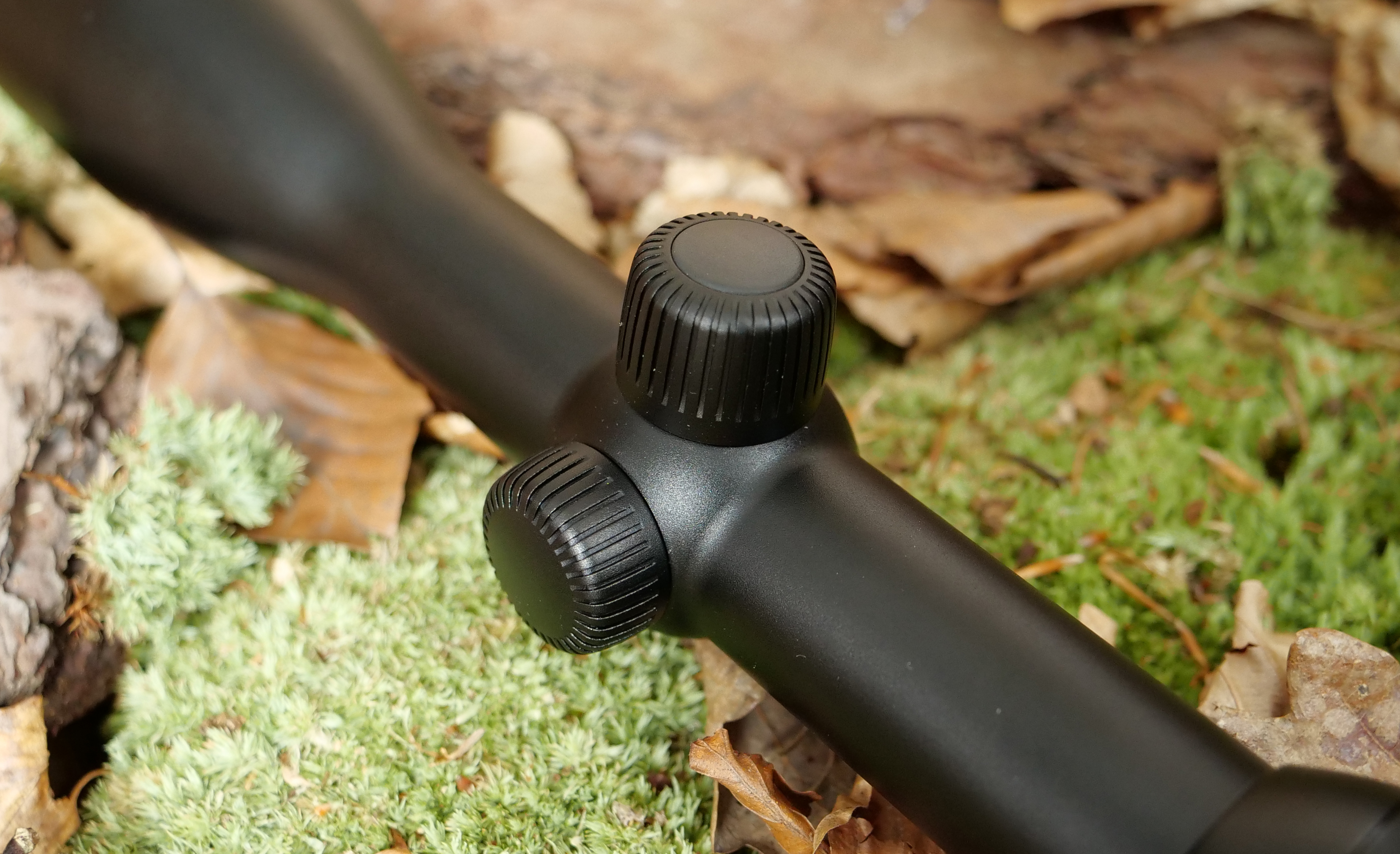
Capped Turrets

Properties

These are the turrets that are being used as the most common choice on rifle scopes. In addition, hunting rifle scopes feature these turrets usually as standard option. Their advantage in hunting situations is that they are low profile. This also means that using them can avoid getting stuck or getting them hit in the bush, between tree branches or similar. They also do not get stuck somewhere on your clothes (pockets, zippers,...) during walking with rifle on your shoulder.

Also, the turrets stay protected under the caps from unintentional movement (adjusting clicks unwantedly). So, should capped turrets always be your decision when buying a hunting rifle scope? Of course, it depends whether the turrets have zero stop or not. For hunting situations, especially in thick terrain, I suggest at least zero stop function. If this function is not an option on your rifle scope, then classical capped turrets would probably be my preferred choice.

What is in common with all capped turrets, is the fact that they are usually only used when zeroing the rifle. Hunters who hunt on planes or mountains and are in need of having more versatile turrets because of easier bullet drop compensations and are also capable of taking longer shots at the same time, usually choose upgraded hunting rifle scopes with BDC (ballistic drop compensation) turrets. Such turrets are normally an upgrade on premium models of rifle scopes.

BDC turrets are probably quite popular nowadays, but majority of hunting rifle scopes still use standard capped turrets. In the past, these were the only form of turrets, found on rifle scopes.

It is important to know that target and tactical turrets can also be equipped with caps, but we shall not mistake them for classical capped turrets. Target and tactical turrets can both be used also without caps and still stay waterproof. However, target turrets are much higher and therefore they can be recognized immediately by their dimensions. If tactical turrets are capped, they are usually of single turn design (turrets are classified of how many times they can be rotated).

One of the important factors when buying a rifle scope are the ranges you plan to shoot at. If you know that most of your shots will be at short or medium ranges, usually there is no need for exposed turrets. If you are a long range hunter, you should probably consider the option with exposed turrets or at least BDC turrets with zero stop function.

Waterproofness of Rifle Scopes if caps are removed 

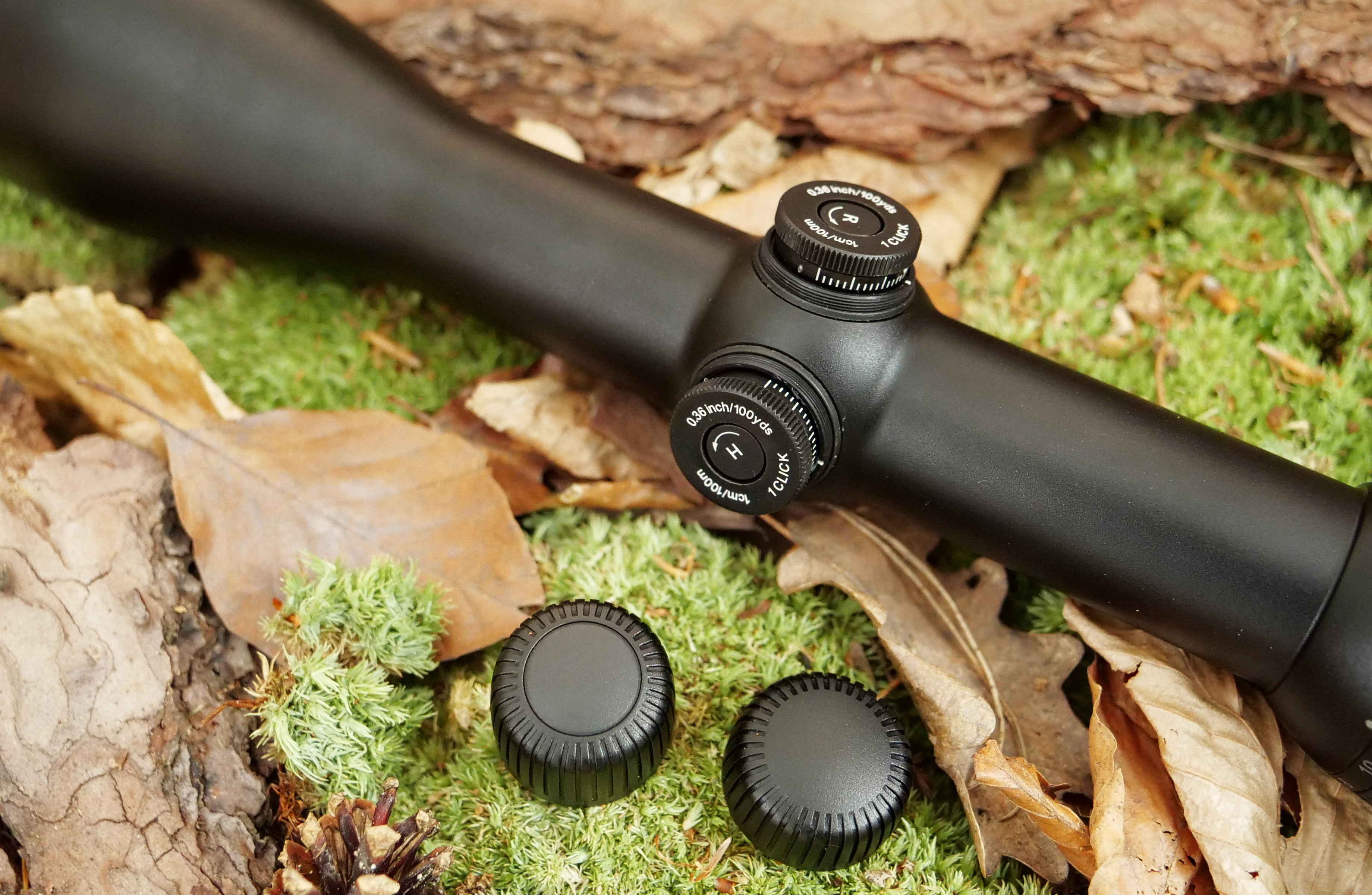
On majority of classic rifle scopes, the construction is not waterproof any more if the caps are removed. In most cases, there is a rubber O-ring seal on the thread of the caps. This O-ring seal keeps the water out when caps are tightened on the turrets. Waterproofness is the main property that makes difference between target, tactical and classical capped turrets. Target and tactical turrets (if equipped with caps) remain waterproof even when caps are removed from the turrets.

Removed Caps

Rifle Scope with removed caps

Conclusion

Classical capped turrets are preferred choice for hunting rifle scopes and are available on the market ever since rifle scopes are being manufactured. The caps normally stay on these scopes until the rifle has to be zeroed or re-zeroed.

Otherwise, people are not taking them off, because they are not the most appropriate choice for adjusting clicks on daily basis. In normal use, caps are tightened to the rifle scope and their main purpose is protecting the turrets against dust, dirt, water and unintentional movement (applying clicks when not needed).

Capped turrets combine two advantages for most users that use their scopes mainly for everyday hunting. These turrets are at the same time the cheapest ones on the market and also the most appropriate choice for the majority of hunters because of their ergonomic features.

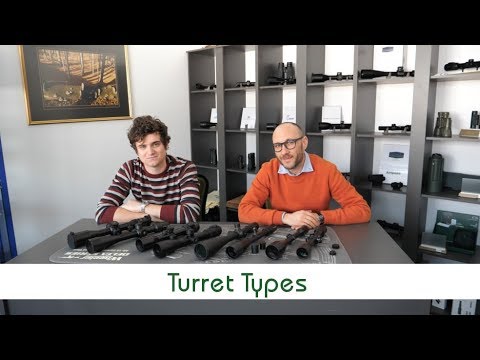
Video presentation of Capped turrets

Filters
Sort
5 Items
Show
per page
Close
Sort By
  1. In stock
  2. Out of stock
  1. Cheapest in stock
In stock
As low as AU$446.22
In stock
As low as AU$734.11
3D model
In stock
As low as AU$942.03
In stock
As low as AU$494.21
In stock
As low as AU$414.24
Filters
Sort
5 Items
Show
per page
Close
Sort By

VIDEO

General properties of Pistol scope

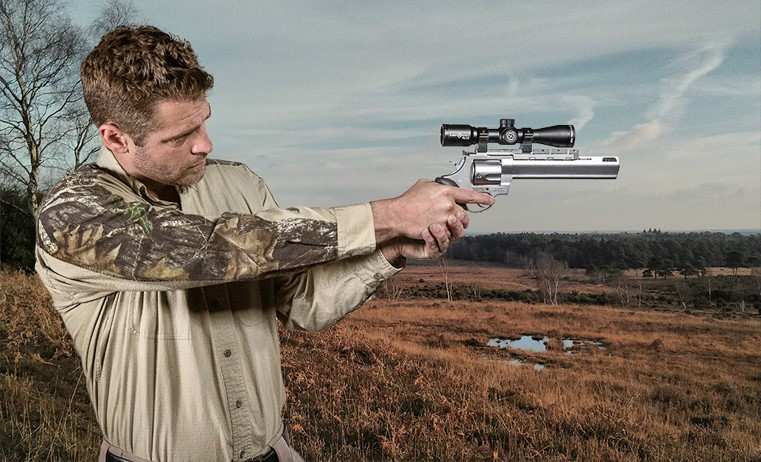
Handgun scopes are similar to rifle scopes in their design, with the main difference being much longer eye relief.

Standard riflescopes usually require the shooter’s eye to be at around 80–90 mm from the ocular, whereas pistol scope have 30, 40, or even 50 centimeters of eye relief.

Other notable features of pistol scope are a 1-inch tube and small size/mass. 

A handgun scope mounted on a revolver - black matte optics

Matte handgun scope mounted on a revolver (source: sightmark.com) 

Magnification, eye box and reticle

Handgun scope feature either:

  • fixed or

  • variable magnification, though fixed magnification is more common.

The parallax on a handgun scope is fixed at somewhere from 25 to 50 m.

Pistol scopes are known for their generous eye-box (standard riflescopes usually require the shooter’s eye to be at around 80–90 mm from the ocular, whereas pistol scopes come with an extended eye relief of somewhere between 400 and 600 mm). 

As pistol scopes are often mounted on revolvers which are known for their substantial recoil, it is also important that they are shockproof and durable.

Differences between pistol scope and scout scope

The main difference between handgun scope and scout scope is in the parallax setting:

  • Handgun scope usually have parallax set to around 25–50 m,
  • whereas scout scopes have it fixed at around 100 m.

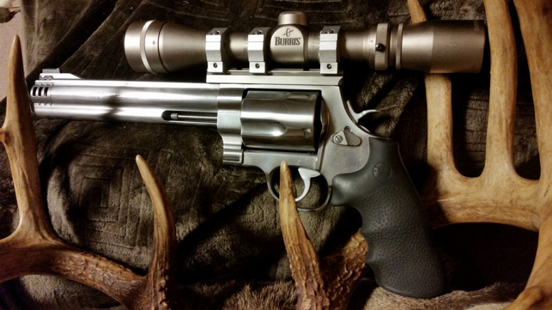
Handgun scope - A revolver with a silver Burris optics

Pistol Scope with a Ballistic Plex Reticle (source: burrisoptics.com)

Mounting of a scope on handguns

How to mount a scope on a Handgun? The rings to mount a scope on handguns are handgun specific.

Pistol scopes are most often mounted on revolvers. Sometimes, they are mounted on a pistol with an installed Picatinny rail.

The scope can be mounted on a special kind of rifle called a scout rifle. 

The scope is mounted on the barrel, right in front of the action. Even though this is possible, scout rifle owners usually opt for a scout scope.

Why are many pistol scopes silver?

These scopes are commonly mounted on revolvers. Most revolvers on the market are silver – a silver handgun scope and a silver revolver are a perfect match. 

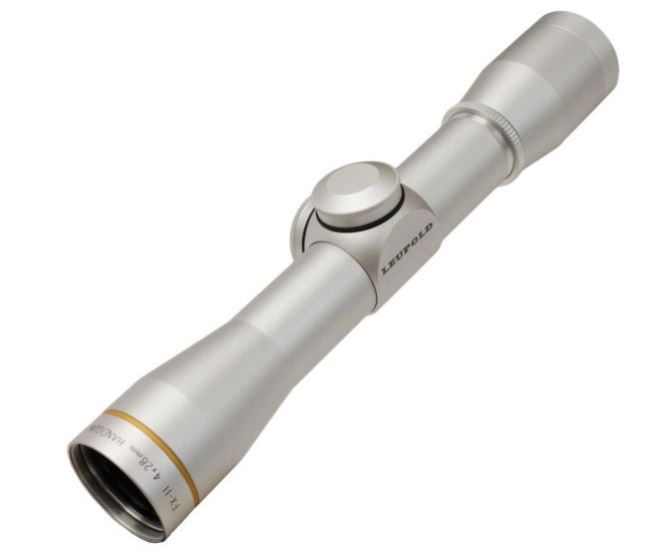
Leupold Handgun FX-II 4x28

Silver Scope Leupold Handgun FX-II 4x28 with Duplex reticle

Most popular product Brands

The most popular brands of handgun products are:

  • Burris

  • Leupold

Short Presentation | Handgun Scope | Optics Trade from Optics-Trade